A family trip to Vietnam is easier than most parents expect, and far more rewarding. You get warm, child-loving locals, beaches that suit toddlers, lantern-lit towns that fascinate primary-school kids, and adventure activities that keep teenagers off their phones. Food is rarely spicy, prices are friendly, and domestic flights make a long, thin country manageable.
That said, Vietnam is not effortless. The traffic is heavy, the humidity is real, and a country this long punishes over-ambitious itineraries. This guide pulls together what actually works for Vietnam travel with family: when to go, where to go for each age group, how to get around with kids, where to stay, and the mistakes that tire families out.
Choosing a base city? Read our guides to where to stay in Hanoi and where to stay in Da Nang, and our dedicated guide to where to stay in Vietnam with family.
Is Vietnam Good for a Family Vacation?
Yes — with one honest caveat. Vietnam works brilliantly for families, but how brilliantly depends on your children’s ages and how you pace the trip.
Why it works:
- Genuinely child-friendly locals. Children often become the stars of any restaurant or hotel lobby, and families eat together everywhere, so nobody minds noisy kids.
- Variety in a short space. Beaches, caves, limestone bays, imperial citadels, rice terraces, river deltas, and big cities all sit within a short flight of each other.
- Good value. Local food, transport, and activities cost far less than most family destinations, so you can afford comfortable rooms and private drivers.
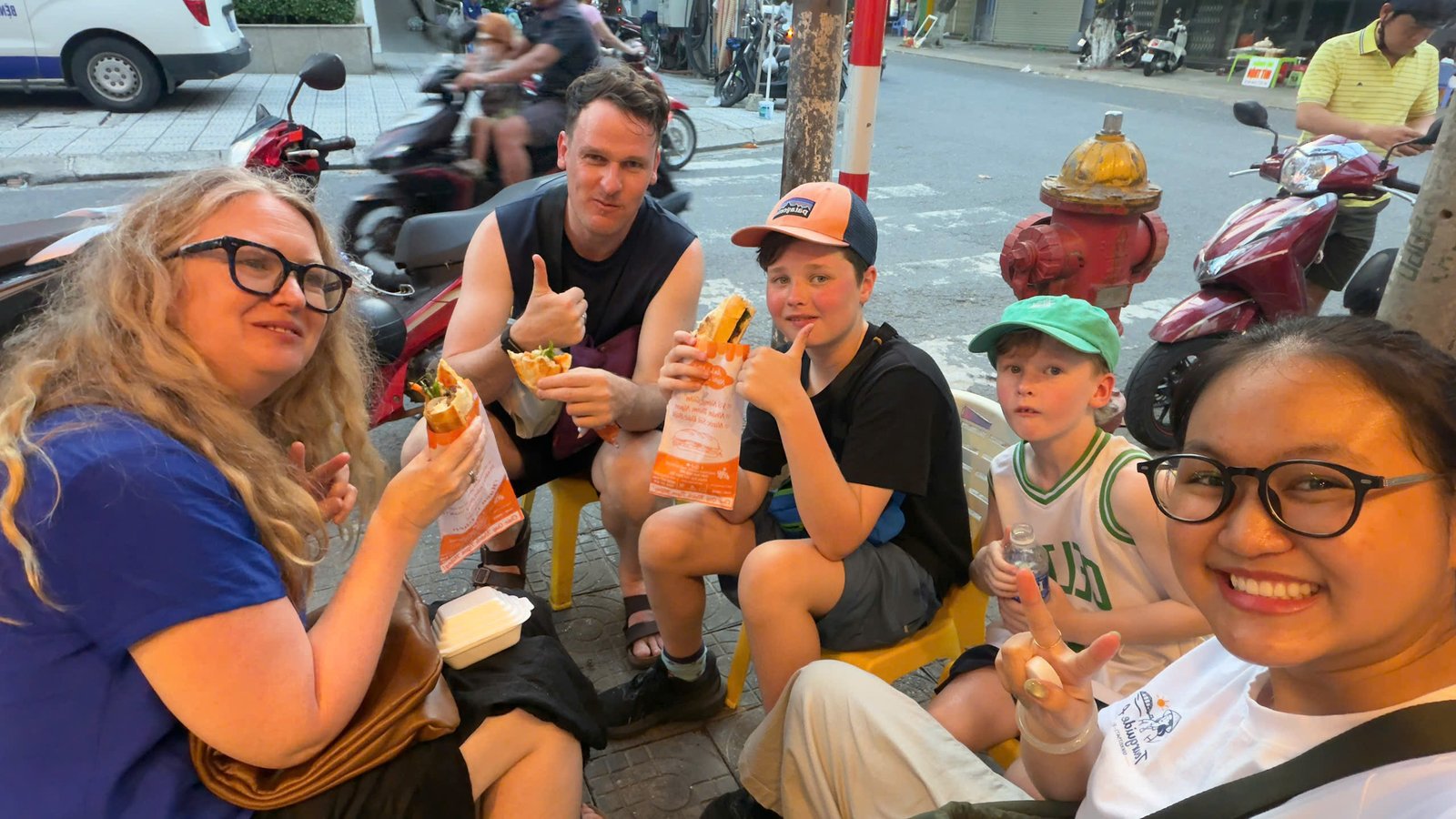
- Easy food. Pho, spring rolls, banh mi, fresh fruit, and rice dishes suit most children, and chili heat is usually added at the table rather than cooked in.
What to plan around:
- Traffic. Crossing the road is the single biggest adjustment (more on that below).
- Heat and humidity. Build in downtime every afternoon, especially in summer.
- Distance. Vietnam is long. Trying to see Hanoi, Hoi An and Ho Chi Minh City in one week is a recipe for tired, grumpy kids.
Quick Summary: Best Places for Families by Age
If you only have a minute, this table matches your children’s ages to the destinations that tend to work best.
| Age group | Best fit | Why |
| Babies & toddlers (0–3) | Phu Quoc, Da Nang beaches, Hanoi or Ho Chi Minh City hotels with pools | Resort comfort, reliable air-conditioning, easy access to baby supplies |
| Young kids (4–9) | Hoi An, Hue, Ninh Binh, Phu Quoc, Mekong Delta | Hands-on, short activities: lantern-making, boat rides, beaches, theme parks |
| Tweens (10–12) | Ha Long / Lan Ha Bay, Phong Nha caves, Hoi An, Cu Chi Tunnels | Adventure plus culture; this age tends to get the most out of the whole country |
| Teens (13+) | Sapa, Dalat, Mui Ne, Nha Trang, Cat Ba | Trekking, canyoning, kitesurfing, kayaking and beach scenes |
Travelling as a family of 3–4 and want to share one room? Focus on beach areas and big-city serviced apartments, where family-sized rooms are easiest to find. Our family accommodation guide explains exactly where to look.
Best Time for a Family Trip to Vietnam
Vietnam has no single “best” month, because the north, centre and south run on different weather patterns. Match your dates to the regions you want to visit.
| Region | Best months | Notes for families |
| North (Hanoi, Ha Long Bay, Ninh Binh, Sapa) | Roughly Oct–Apr | Winters (Dec–Feb) can be cold and damp, with real chill in the mountains around Sapa. Summers are hot and humid. |
| Central (Hue, Da Nang, Hoi An, Nha Trang) | Roughly Feb–May | Dry and warm, ideal for beaches. Autumn brings heavier rain and the risk of storms. |
| South (Ho Chi Minh City, Mekong Delta, Phu Quoc) | Roughly Dec–Apr | Dry season. The rainy season usually means short, heavy afternoon showers rather than all-day rain. |
The sweet spot: Several tour operators point to January to April as the most reliable window for a north-to-south trip, since most of the country is relatively dry. Families tied to school holidays should note that Tet (Lunar New Year), in late January or February, is fascinating but means some shop closures and much busier transport. Book flights and trains well ahead if you travel then.
How Long Do You Need for a Vietnam Family Vacation?
Resist the temptation to see everything. Vietnam rewards slowing down.
- 7 days: Pick one region (for example, Da Nang, Hoi An and Hue), or combine Hanoi with one beach stop.
- 10 days: North plus centre, or centre plus south, with one or two domestic flights.
- 14 days: The classic Hanoi-to-Ho Chi Minh City route, with a beach stop to recover.
- 3+ weeks: Add Sapa, Phong Nha, Dalat or the Mekong Delta, and keep a few empty days in the schedule.
A rule worth following: if you are short on time, choose between the north and the south rather than rushing the whole country. There is no prize for ticking off both ends of Vietnam in nine days, and children are usually happier with fewer, longer stays.
Best Destinations for Vietnam Family Holidays
Hanoi: Culture, Water Puppets and Train Street
Vietnam’s capital is loud and busy, and honestly, it can be a challenge with very young children. But it rewards families who give it two or three days: a stroll around Hoan Kiem Lake, an evening at the Thang Long Water Puppet Theatre, a food tour, and a visit to Train Street. Older kids may enjoy Hoa Lo Prison, while an indoor play centre or water park offers a welcome break from the heat.
Where to base yourselves: see our Hanoi neighborhood guide. Tay Ho is usually the easiest area for families who need space.
Ha Long Bay and Lan Ha Bay: Cruise, Kayak, Swim
A cruise among the limestone karsts is a highlight of many Vietnam family holidays. Choose a family-friendly boat, insist on life jackets for everyone, and consider quieter Lan Ha Bay or Bai Tu Long Bay to avoid the heaviest crowds. Kayaking, cave visits, and bamboo-boat rides keep children engaged, and active teens can try rock climbing around Cat Ba.
Ninh Binh: Rowing Through the Rice Fields
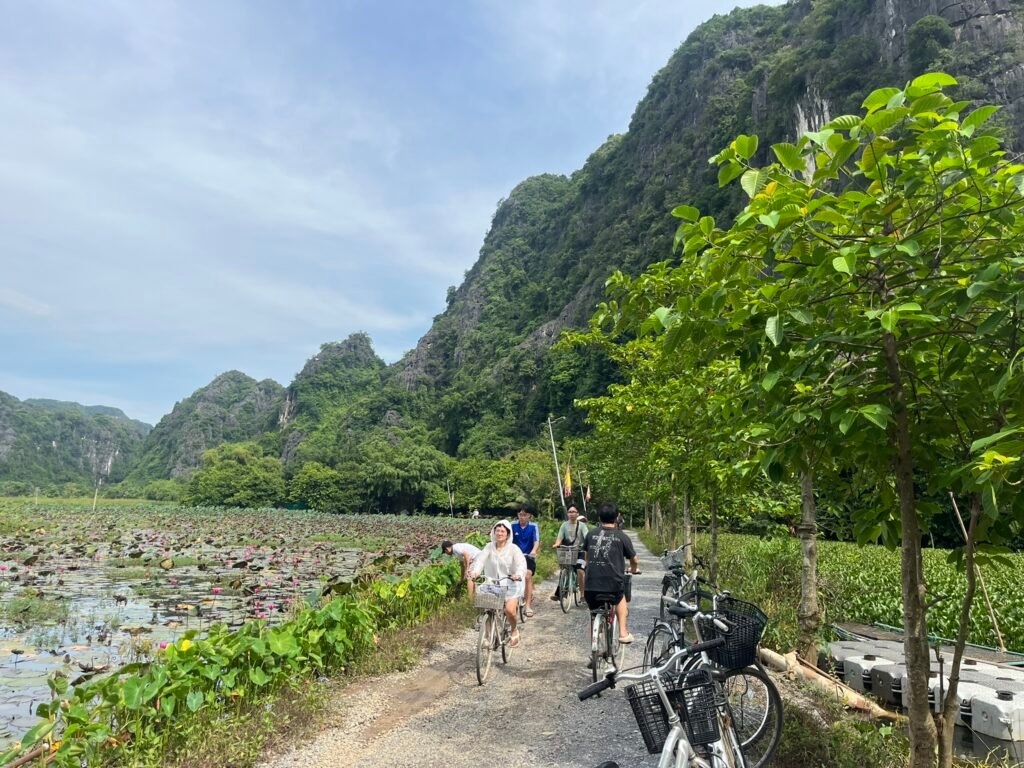
A peaceful, scenic stop about two hours from Hanoi. Boat trips at Trang An and Tam Coc drift through caves and paddy fields, rowed by local guides. Go early to beat the crowds and the heat — there is little shade on the water.
Hue: History in Bite-Size Pieces
Vietnam’s former imperial capital works for children if you keep it short. Visit the Imperial City in the cooler late afternoon, add one quiet royal tomb, and finish with a boat ride on the Perfume River to Thien Mu Pagoda. Don’t try to do everything — Hue is a place to sample, not conquer.
Da Nang: Beaches, Bridges and a Compact City
Da Nang is one of the easiest bases in the country for families. My Khe Beach is long and walkable, the city is compact, and hotels offer pools, sea views and family rooms at good prices. It’s also the gateway to the Marble Mountains, Ba Na Hills and Hoi An. Watch for currents on the central coast beaches, and choose lifeguarded resort beaches with younger children.
Planning a stay? See our Da Nang area-by-area guide.
Hoi An: Lanterns, Cooking Classes and Cycling
Few places in Vietnam are as universally loved by families. The old town feels like stepping back in time, with lantern-making workshops, clay-pot classes, cyclo rides, coconut-basket boats and the shallow, sandy An Bang Beach nearby. The old town gets very crowded in the evenings, so many families choose accommodation in the surrounding countryside and visit in the morning, when it’s calmer.
Phong Nha: Caves for Adventurous Kids
A step up in adventure. Boat rides into Phong Nha Cave, the vast chambers of Paradise Cave, and the mud-bath-and-kayak Dark Cave experience are favorites with older children and teens.
Nha Trang, Mui Ne and Dalat: Beaches and Action for Teens
Nha Trang has a long city beach, boat trips and theme-park options. Mui Ne offers kitesurfing, sand dunes and the Fairy Stream. Dalat’s cooler hills add canyoning, waterfalls and mountain biking. Not every family loves Nha Trang’s built-up feel, so research before you commit.
Sapa: Trekking and Mountain Views
A favorite with families who enjoy walking. Stay in a countryside homestay rather than the busy town centre, trek through villages and rice terraces, and consider the Fansipan cable car. Pack warm layers in winter, and keep journeys short because the mountain roads can cause motion sickness.
Ho Chi Minh City and the Mekong Delta
Vietnam’s biggest city has water parks, markets, French colonial landmarks, and the Cu Chi Tunnels, which many children enjoy crawling through (though the tight spaces aren’t for everyone). The War Remnants Museum contains graphic material, so check whether it suits your children before you go. A day trip into the Mekong Delta adds boat rides and a glimpse of rural life.
Phu Quoc: The Easy Beach Holiday
If your goal is simply sun, sand, and a relaxing family vacation, Phu Quoc has gentle beaches, resorts for every budget, the VinWonders theme park, and an overwater cable car. It is a particularly strong choice for babies and toddlers, and the island has direct international flights.
Sample Itineraries for a Family Trip to Vietnam
Rather than generic day-by-day lists, here are four real private itineraries planned by our local team in Da Nang. Each was built around a real family’s ages and pace, and every one can be adjusted to yours. They show how a well-paced family trip to Vietnam actually works: few stops, short drives, and rest built into every day.
10 Days: Hanoi to Hoi An by Train, with Kids
Best for: families with kids aged 5+ · Route: Ninh Binh → Phong Nha → Hue → Hoi An · Max driving: 3 hours a day
This is our most popular first-time route for Vietnam family holidays. It skips the exhausting “see everything” approach, with just four stops and a night train for the longest leg.
| Days | Where | Family highlights | How you get there |
| 1–4 | Ninh Binh (3 nights) | Private sampan through the caves and karsts at Trang An, a gentle bike ride past rice paddies in Tam Coc, sunset boat trip at Thung Nham Bird Valley | 2-hour private drive from Hanoi |
| 4–5 | Overnight train | Private 4-berth sleeper cabin: everyone sleeps while the train covers the longest stretch | Ninh Binh to Dong Hoi |
| 5–6 | Phong Nha (2 nights) | A farm day with ducks and buffalo at The Duck Stop, then a boat ride into Phong Nha Cave | 40-minute transfer from the station |
| 7–9 | Hue (3 nights) | Imperial City by electric cart, a hands-on craft workshop (lotus flowers, kite painting or conical hats), sunset dragon-boat cruise | About 3 hours via the former DMZ |
| 10 | Hue to Hoi An | Seafood lunch at Lang Co Bay and coffee with views at the Hai Van Pass summit | About 3 hours with scenic stops |
Why families like it: never more than 3 hours on the road in a day, 2–3 nights at every stop, and guides only where they add value (Trang An, Phong Nha Cave and the Hue Citadel), leaving the rest of the time at your own pace. Travelling with children under 5? We swap the night train for a private car and split the drive.
Price guide: guides and transfers from about $830 for a family of four (land only, excluding hotels and flights; your quote depends on dates and group size).
See the full 10-day Hanoi to Hoi An family itinerary
3 Days: Ba Na Hills, Hoi An & Hue from One Hotel in Da Nang
Best for: multi-generational groups · Base: one hotel in Da Nang
Short on time, or travelling with grandparents who don’t want to pack and unpack? This route covers three of central Vietnam’s biggest sights from a single Da Nang base. We designed it for a group of 13 across three generations, including an 84-year-old grandmother, with short walks, a private 16-seat van and a flexible pace.
See the 3-day Ba Na, Hoi An & Hue family tour
Using Da Nang as your base? Our Da Nang area-by-area guide shows where families find the most space.
11 Days: The Northern Mountains at an Easy Pace
Best for: grandparents and senior travellers · Route: Hanoi → Mai Chau → Pu Luong → Ninh Binh → Hanoi
Not every family trip is about toddlers. This route takes in flat valley villages, rice terraces and the limestone scenery of Ninh Binh with no steep climbs and 10 hotel nights included. It is a good model if grandparents are joining your family trip, and the sample price of $2,659 is for a couple.
See the 11-day northern mountains itinerary
29 Days: Four Slow Weeks from Hanoi to Con Dao
Best for: longer family adventures · Route: Hanoi → Pu Luong → Ninh Binh → Phong Nha → Hoi An → Saigon → Con Dao
Planned for a mother travelling with four children aged 3 to 13, this month-long journey has a guide on every tour day, a speedboat trip to the Cu Chi Tunnels and a kite-flying free day. It shows how a longer trip can stay relaxed, with empty days built in. The land tour starts from about $4,800 for a family of five.
See the 29-day Hanoi to Con Dao family tour
Only Have a Day? Family Day Trips and Workshops
If you are already in Hanoi, Da Nang, or Hoi An and want to add something small, browse our private family day trips or hands-on family workshops and experiences, including lantern-making, cooking, and beach yoga.
Make Any Itinerary Your Own
Every route above is a starting point rather than a fixed package. Add Hanoi at the start, extend your time in Hoi An, or swap in a beach stay. Our team will send a free day-by-day plan built around your children’s ages, naps, and energy, with no booking required. For ideas on pacing, see our guides on Vietnam with toddlers and Vietnam with grandparents.
Getting Around Vietnam with Kids
Vietnam is long, so most family trips include a few big hops. Choose transport based on your children’s ages and patience.
Domestic Flights
For the long legs — Hanoi to Da Nang, or Da Nang to Ho Chi Minh City — a flight of roughly an hour or two saves hours of road travel and keeps tired children happy. Consider booking with Vietnam Airlines to minimize potential flight delays, as they maintain the highest on-time performance rate in Vietnam. Book early for holiday periods.
Trains
Trains are a favorite for families. The north-south railway is a rail adventure in itself, and the coastal stretch between Hue and Da Nang is especially scenic. For overnight or long journeys, book a private four-berth or six-berth sleeper compartment rather than ordinary seats, which can be crowded. Food on board is limited, so bring snacks and water. Book as early as you can, particularly around Tet and school holidays.
Private Cars and Drivers
For short hops and mountain areas, a car and driver is often the most comfortable choice for families. You can stop whenever you need, and the cost shared across a family is often modest. Keep journeys short on winding roads, and ask your driver to take it slowly if anyone gets car sick.
Grab and Taxis
The ride-hailing app Grab works in most towns and cities, removes fare negotiation, and works well when you are juggling children and luggage. Get a local SIM or eSIM so you can book a ride whenever you need one.
Sleeper Buses
Vietnam’s sleeper buses are comfortable, and kids often love the flat beds. They are best for daytime journeys; many families avoid overnight bus travel, and the front or middle of the bus is much smoother than the back for anyone prone to car sickness.
Motorbike Tours
An experienced guide driving while your child rides pillion can be a highlight, especially for older children (age limits apply). Keep them to a single day — several hours on the back of a bike is tiring.
Car Seats
Child seats are hard to find in taxis and many tour vehicles. If your children are young, bring your own seat and use it, even on short trips.
Where to Stay: Family Rooms & Serviced Apartments
Accommodation is where a family trip is often made or broken. A few principles:
- Look for family rooms or connecting rooms, not just “triple” rooms. Many budget hotels can add an extra bed to a double, but space gets tight.
- Serviced apartments are a hidden gem for families of three or four. You get a kitchen, a washing machine, and more space — a real help on longer stays.
- Choose a hotel with a pool, especially away from the beach. It is the easiest way to beat the afternoon heat.
- Check the room photos for windows. Some budget rooms have none.
- In Hoi An and Sapa, consider staying outside the centre. Quieter countryside stays make mornings in town far more relaxed.
- Don’t trust ratings alone. Cross-check recent reviews across several platforms.
Where families actually find the most space for the money:
- Hanoi: the Tay Ho (West Lake) area has the most serviced apartments and family suites. See our Hanoi hotel guide.
- Da Nang: the My Khe / My An beach strip offers the widest choice of family-friendly hotels. See our Da Nang guide.
- Everywhere else: our complete family accommodation guide covers how to book a room for 3–4 people without overpaying.
Visa, Health & Safety for Families
Visa Requirements
Rules change, so always confirm on the official government portal before booking. As of mid-2026, the general picture is:
- E-visa: open to citizens of most countries, valid for up to 90 days, single or multiple entry, around US$25 per person. Every family member, including children, needs their own passport and visa or exemption.
- Visa exemption: a number of nationalities, including the UK, Germany and France, can enter for up to 45 days without a visa. Some require a gap of 30 days between visa-free visits.
- US, Canadian and Australian passport holders currently need an e-visa.
Apply only through the official government portal, and beware of look-alike sites that charge inflated fees.
Is Vietnam Safe for Families?
Vietnam is widely considered a safe country for children, and serious crime against tourists is rare. The real risks are everyday ones:
- Traffic. Cross slowly and steadily, make eye contact, avoid sudden movements, and let motorbikes flow around you. Walk with children on the inside, away from traffic. Wait for a local to help on your first few crossings.
- Pavements. They are often full of parked motorbikes and food carts. A baby carrier is much easier than a stroller.
- Bag snatching. Keep phones and bags away from the roadside.
- Water safety. Rip currents occur on some beaches. Use lifeguarded resort beaches with young children, and insist on life jackets on boats.
- Sun and mosquitoes. Use high-factor sunscreen (bring it from home — it can be hard to find) and a high-concentration insect repellent.
- Tummy bugs. Use hand sanitizer, stick to bottled or filtered water, and choose busy restaurants with high turnover.
Health & Insurance
Talk to your doctor or a travel clinic about vaccinations well before departure. Malaria risk is considered low or negligible in the main tourist areas, but get professional advice for your specific route. Take comprehensive travel insurance that covers the whole family, including medical evacuation.
Food, Packing & Budget
Eating with Kids
Vietnamese food is often milder than people expect. Reliable family favorites include pho, spring rolls, banh mi, bun cha, rice dishes, and plenty of fresh fruit smoothies. Tourist-oriented restaurants usually have high chairs, and pizza and pasta are widely available for fussier eaters. Hotel breakfasts at budget places can be underwhelming, so consider a local breakfast café instead.
What to Pack
- Lightweight, breathable clothing, a swimsuit and a sun hat
- Sunscreen and a rash vest for beach days
- Insect repellent, hand sanitizer and basic medicines
- A baby carrier instead of a stroller
- Warm layers if you’re visiting the north between November and February
- Comfortable walking sandals or trainers
- A child car seat, if your children need one
- Snacks, plus entertainment for long journeys
Money & Budget
Cash is still widely used, especially for small restaurants, markets and smaller sites, so carry local currency. ATMs have withdrawal limits, so plan ahead. As a very rough guide for a family of four, excluding international flights (prices vary widely by season and style):
| Style | Approx. per day | What it typically covers |
| Budget | US$80–130 | Simple family rooms, local food, public transport |
| Mid-range | US$150–280 | Comfortable hotels with pools, a mix of restaurants, private transfers and activities |
| Comfort/luxury | US$300+ | Resorts, private drivers, guided experiences |
Treat these figures as planning estimates and check current prices before you book. For a fully private, all-handled option, our family tour packages start from about $180 per family per day.
Practical Tips from Families Who’ve Done It
- Don’t over-schedule. Two or three nights per stop is plenty, and children need empty afternoons.
- Plan around the heat. Do outdoor sightseeing in the morning, and use midday for pool time.
- Choose one base in each region and take day trips, rather than changing hotels every night.
- Pre-book the big things (train sleepers, popular cruises, holiday-season flights), and keep the rest flexible.
- Get a local SIM or eSIM so you can always book a ride or translate a menu.
- Learn a few Vietnamese phrases. English is limited outside the main tourist areas, and a translation app is invaluable.
- Respect temple etiquette. Dress modestly when visiting pagodas and temples.
- Keep a flexible mindset. Things will go slightly wrong, and that’s part of the adventure.
FAQs About a Family Trip to Vietnam
Is Vietnam good for a family vacation? Yes. Vietnam is affordable, safe, and full of activities for all ages, from beaches for toddlers to trekking and kayaking for teens. Success depends mostly on pacing and choosing the right destinations for your children’s ages.
What is the best age to take kids to Vietnam? Vietnam works at every age, but many families find children aged about 4 and up the easiest, once they can walk, talk, and handle the heat. Tweens often get the most out of the variety.
How many days do you need for Vietnam family holidays? Ten to fourteen days is ideal for a first trip covering two regions. A week works well if you focus on one region such as central Vietnam.
What is the best month for a family trip to Vietnam? January to April is generally the most reliable window for a north-to-south trip, but the best month depends on which regions you visit.
Is Vietnam safe for children? Yes, serious crime is rare. The main risks are traffic, heat, sun and the occasional stomach upset, all manageable with sensible precautions.
Can you travel Vietnam with a baby or toddler? Yes. Focus on beach resorts and big-city hotels with reliable air-conditioning, pools and easy access to baby supplies. Bring a baby carrier rather than a stroller, and stock up on formula and diapers in cities before heading to rural areas.
Where should families stay in Vietnam? Serviced apartments and family rooms in Tay Ho (Hanoi), My Khe Beach (Da Nang), and resort areas like Phu Quoc offer the most space. See our family accommodation guide for specific picks.
Do we need a tour, or can we travel independently? Both work. Independent travel is easy thanks to Grab, trains, and domestic flights, while family tours handle logistics and can include child discounts. Many families mix the two, booking guided days for activities like Ha Long Bay or Hoi An to Hue.
Do children need a visa for Vietnam? Yes. Every traveler, including children, needs a valid passport and either a visa or an eligible exemption. Check the latest rules on the official government portal before booking.
Conclusion: Make Your Family Trip to Vietnam Easy
The best family trip to Vietnam isn’t the one that covers the most ground — it’s the one that matches your children’s ages and gives everyone room to breathe. Choose one or two regions, base yourselves in family-friendly areas, travel by plane and train for the long hops, and keep your days light.
Do that, and Vietnam delivers something special: a country where children are welcomed everywhere, adventures are easy to arrange, and the memories — lantern-lit streets, boat rides through karsts, sandy beaches and street-food dinners — stay with the whole family long after you’ve flown home.
Want a local team to plan it for you? Browse our private Vietnam family tours or get a free day-by-day plan. Prefer to plan it yourself? Begin with where to stay in Hanoi, where to stay in Da Nang, and our full guide to where to stay in Vietnam with family.